
The SouthernLUXE Letter
My notes from Franklin, Brentwood, Nashville, and across Middle Tennessee: what the latest numbers say, what they mean for your plans, and why the honest story is better than the headlines.

The SouthernLUXE Letter
My notes from Franklin, Nashville, and the Middle Tennessee market
Dear friends,
October ended with three new posts that, read together, describe the market exactly as it is: Nashville is no longer one market but two, the average home is selling two to three percent below its asking price, and the old rule about needing 20 percent down has quietly stopped applying to most buyers. Each post answers a question that lands in my inbox every week, so this letter walks through what the data says, what it means depending on which side of the table you sit on, and where the honest opportunities are as we move into November.
The market has split in two, and the line is near one million dollars.
The most useful thing I can tell you about Middle Tennessee right now is that there is no single market anymore. Below roughly $1 million, homes are taking longer to sell, more listings carry price cuts, and buyers hold genuine negotiating room. Above that line, well-priced homes still draw multiple offers, and sales are growing. That split is not a feeling; it is visible in the numbers.
Across the ten-county region, the median sale price sits near $444,000, up about 2 percent year over year, with active listings up about 8 percent and supply approaching six months. In Nashville proper, the three-month median is near $465,000, slightly below a year ago, and homes take a median of roughly 66 days to sell. Williamson County tells the other half of the story: 404 closings in September at a $950,000 median, closings up about 7 percent year over year, with supply running above five months even as prices hold. The 30-year fixed rate averaged 7.32 percent for the week ending October 22, after touching 7.40 percent earlier in the month and up from about 6.2 percent a year ago. Rates land hardest below $1 million, where buyers are the most payment-sensitive. Buyers above that line often bring equity or income that does not depend on financing, so rate moves hurt far less. When rate-sensitive buyers pull back and rate-tolerant buyers keep moving, you get two markets running side by side. I wrote the full breakdown, including what sells fast and what sits, in Why Some Nashville Homes Sell Fast While Others Sit.
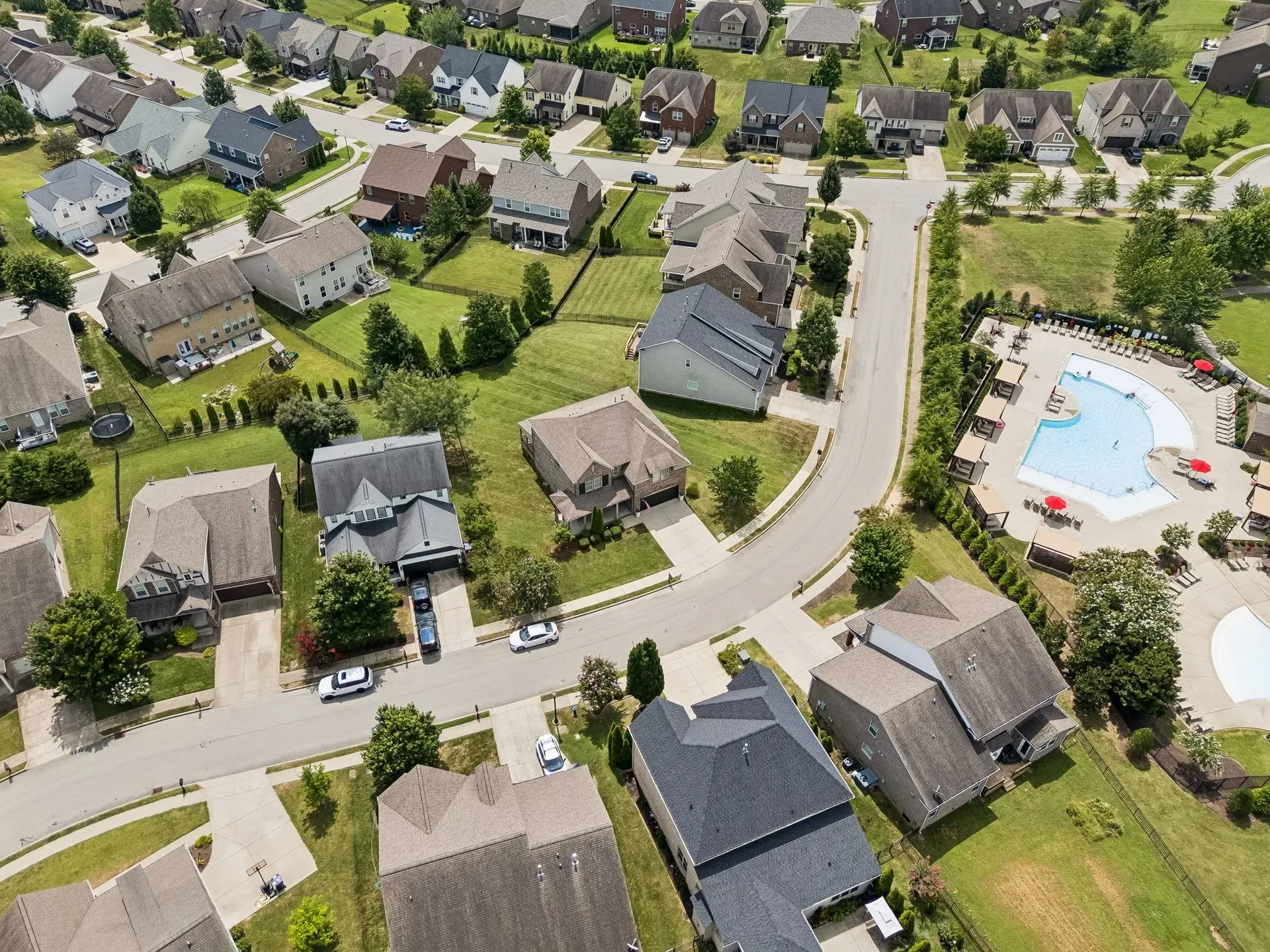
Buyers: the leverage is real, and it is showing up in the offers.
The buyer version of that story is the question I hear most right now: how far below asking can I actually offer? The honest headline is that most homes are selling for about 97.4 to 97.8 percent of their final list price, which translates to roughly 2 to 3 percent of room on the average deal. On a $600,000 home, that is about $13,000 to $16,000. And the room does not stop at the price: three of every five Nashville sellers gave some form of concession in August, 63.1 percent versus 44.7 percent nationally, typically closing cost credits, mortgage rate buydowns, or repair credits. Redfin ranked Nashville the strongest buyer's market in the country in August, with the widest gap between sellers and buyers since 2013.
Where you look matters as much as the average. Davidson County is where the pressure is most visible: about 6.5 months of supply, a single-family median near $505,000, down about 3 percent year over year, and newly signed contracts down sharply. Williamson County is tighter, with months of supply near four, and even inside the county the towns split: roughly 4.8 months in Franklin, 5.2 in Brentwood, and 7.6 in College Grove. A buyer in College Grove or in a Nashville starter has considerably more leverage than a buyer chasing a well-priced $1.2 million home in Brentwood. The full playbook, including when a low offer backfires, is in How Far Below Asking Can You Offer in Nashville?.
The 20 percent rule, revisited for the buyers asking this week.
The third question of the week is the one first-time buyers have been asking for a generation, and the honest answer is no: you do not need 20 percent down to buy in Middle Tennessee. The rule was never the law. FHA loans allow as little as 3.5 percent down, and Fannie Mae and Freddie Mac conventional loans at 3 percent have been standard for qualified first-time buyers. Tennessee's own housing agency makes it easier still: the THDA Great Choice loan targets first-time buyers, and Great Choice Plus layers on down payment assistance up to $6,000 deferred at 0 percent interest, or up to 5 percent of the price capped at $15,000. The honest limits are the $500,000 purchase price cap and the income ceilings, which in Williamson County run $139,320 for one or two-person households and $162,540 for three or more. In plain terms, assistance fits beautifully below the cap, in condos, townhomes, and entry-level homes in places like Nolensville, Thompson's Station, and parts of Spring Hill, and it will not stretch to a $900,000 home in Franklin proper.
Here is the part buyers rarely hear: the down payment is only half the equation. At Franklin's median near $863,000, 20 percent down is $172,600; 10 percent is about $86,000; 5 percent is roughly $43,000. The distance between $43,000 and $172,000 is the difference between buying this year and waiting three more years for many families. And because the 30-year fixed rate sat just over 7.3 percent in late October, the monthly payment is the real test. A Williamson County household needs close to $230,000 a year to carry the county's median list price, and a metro-wide analysis put the income needed for a median-priced home near $145,000. The discipline is less about the percentage you put down and more about the price point you choose, the lender who runs conventional, FHA, and THDA scenarios side by side, and the cash you keep for closing costs and inspections. I ran the full math in Do You Really Need 20% Down to Buy in Middle Tennessee?, and our first-time buyer hub walks through the programs in order.
What this means for sellers, and for the families deciding either way.
If you are selling below $1 million, the split market is a pricing discipline test. The gap between list price and closing price in this market runs about 2 to 3 percent, and buyers know it, so the homes that move fast are priced against the last 90 days of closed sales within a half mile, not against what a neighbor hopes to get. In Williamson County, prices are holding while negotiation has become real, and the top of the market above $1 million has been the strongest part of the region all year. If rates drift back down, the fastest-moving band will likely flip, because the sub-$1 million market is the most rate-sensitive and therefore the most rate-rewarded. Sellers who are well positioned and priced honestly are ready either way. I expanded on the seller side in Should I Sell My Home Now, or Wait?, and the county-by-county numbers behind all of these decisions live in the market report.
I will leave you with this week's one-line takeaway. This is a market of prepared people: buyers who bring a real offer, a pre-approval, and a walk-away number are winning the conversation, and sellers who price on day one are the ones closing on time at numbers they can live with. The headlines make it sound complicated. The data makes it simple. Know which market your home, or your next home, is in; price or offer accordingly; and let the comps, not the averages, set your number. That is the whole playbook, and I am glad to sit down and run it against your specific situation any time. Holler with any questions...we're here for you!
Talk soon, Mike

REAL Broker
TN Lic: 372786
Read the full posts
Do You Really Need 20% Down to Buy in Middle Tennessee?
Why Some Nashville Homes Sell Fast While Others Sit: The Market Has Split in Two
How Far Below Asking Can You Offer in Nashville Right Now? An Honest Guide for Buyers
Should I Sell My Home Now, or Wait? An Honest Fall 2026 Answer for Middle Tennessee Sellers
Is That Home in a Flood Zone? An Honest Guide for Middle Tennessee Buyers
How Much Home Can I Actually Afford in Middle Tennessee? The Honest Math
Are Nashville Home Prices Dropping? An Honest Read of the Fall 2026 Data
Is It a Buyer's or Seller's Market in Middle Tennessee Right Now?
Who Pays the Buyer's Agent in Nashville Now?
Want to talk about what this market means for you?
A free consultation gives you a clear read on your price band, your neighborhood, and your timing. No pressure, no jargon, just straight answers.
Talk soon, Mike